
Surprising Cat Facts That Change How You See Your Pet
Animals · 8 min read · 9/19/2026
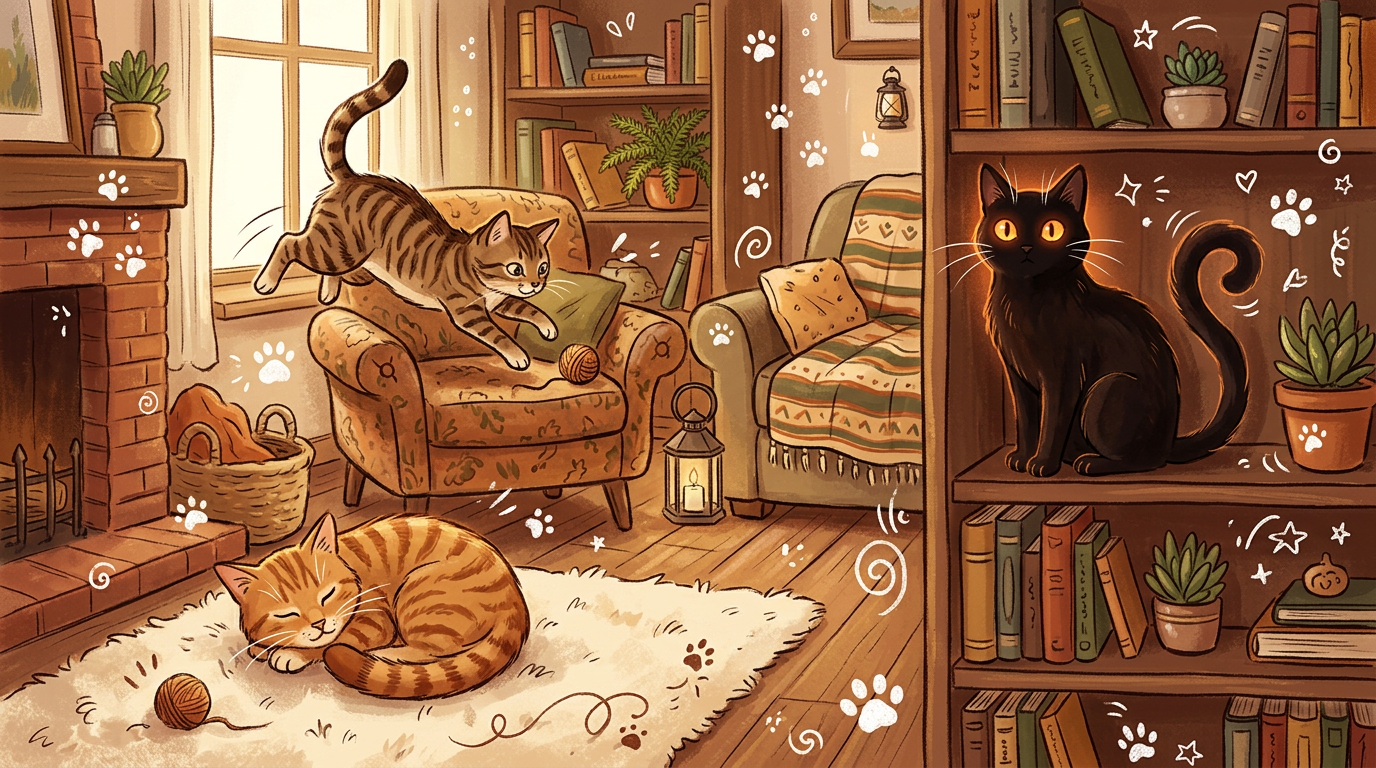
Cats have lived beside people for roughly 10,000 years, yet their path into our homes differed sharply from that of dogs. Wildcats were attracted to early farming settlements by rodents feeding on stored grain. Humans benefited from pest control, and the least fearful cats gained a reliable food source. That gradual partnership helps explain why a house cat still looks and behaves much like a small solitary hunter.
A body designed for stealth
A cat's shoulder blades attach to the body mainly through muscle rather than a rigid bony joint, while its collarbones are small and free-floating. This flexible structure lengthens the stride and lets a cat pass through narrow openings. Whiskers help with that calculation: deeply rooted sensory hairs detect nearby surfaces and subtle air movement.
- Cats normally walk on their toes, a stance called digitigrade locomotion.
- Their rough tongues carry backward-facing papillae made from keratin.
- A reflective layer behind the retina, the tapetum lucidum, improves vision in low light.
- Each outer ear is controlled by numerous muscles, allowing it to swivel toward sound.
Meowing is mostly for people
Adult cats communicate with one another largely through scent, posture and quieter vocal sounds. Meowing is especially prominent in cat-to-human communication. Individual cats learn which sounds bring a response, and owners often become good at distinguishing requests for food, access or attention without consciously learning a formal vocabulary.
A house cat is not silent with other cats, but it saves much of its most elaborate meowing for us.
Purring has more than one meaning
Purring commonly accompanies contentment, but cats also purr when frightened, injured or giving birth. It may help them soothe themselves or maintain social contact. Claims that purring definitely heals bones are stronger than the evidence; the vibration frequencies are interesting, but purpose and medical effect remain active questions.
Cats can taste a smell
The vomeronasal organ in the roof of a cat's mouth detects chemical signals. When a cat holds its mouth slightly open after investigating a scent, it is performing the flehmen response and drawing molecules toward that organ. The expression may look like a grimace, but it is really close analysis.
- Domestic cats lack a functioning receptor for sweetness.
- A group of adult cats may be called a clowder.
- Slow blinking can signal a relaxed, non-threatening interaction.
- Kneading is a kittenhood movement that many cats retain into adulthood.
The familiar pet on the sofa is therefore both companion and precision predator. Its flexible skeleton, sensitive whiskers, rotating ears and chemical senses still serve the same basic purposes they did before domestication, even when the most demanding hunt of the day is finding a treat under the furniture.
Shop this topic on Amazon
As an Amazon Associate we earn from qualifying purchases.
Test yourself on this topic

Animals · 12 questions
Animal Oddities Quiz: 12 Facts That Sound Made Up
Twelve questions about record breakers, strange defences and animals whose reputations are entirely wrong.
Animals · 12 questions
Animal Oddities Quiz: 12 Facts That Sound Made Up
Twelve questions about record breakers, strange defences and animals whose reputations are entirely wrong.
Comments
Share your score, argue with a question or add a fact we missed. Comments are checked before they appear, and links are removed automatically.
- No comments yet. Be the first.