Hollywood Stunt Facts From Behind the Camera
Movies · 8 min read · 9/15/2026
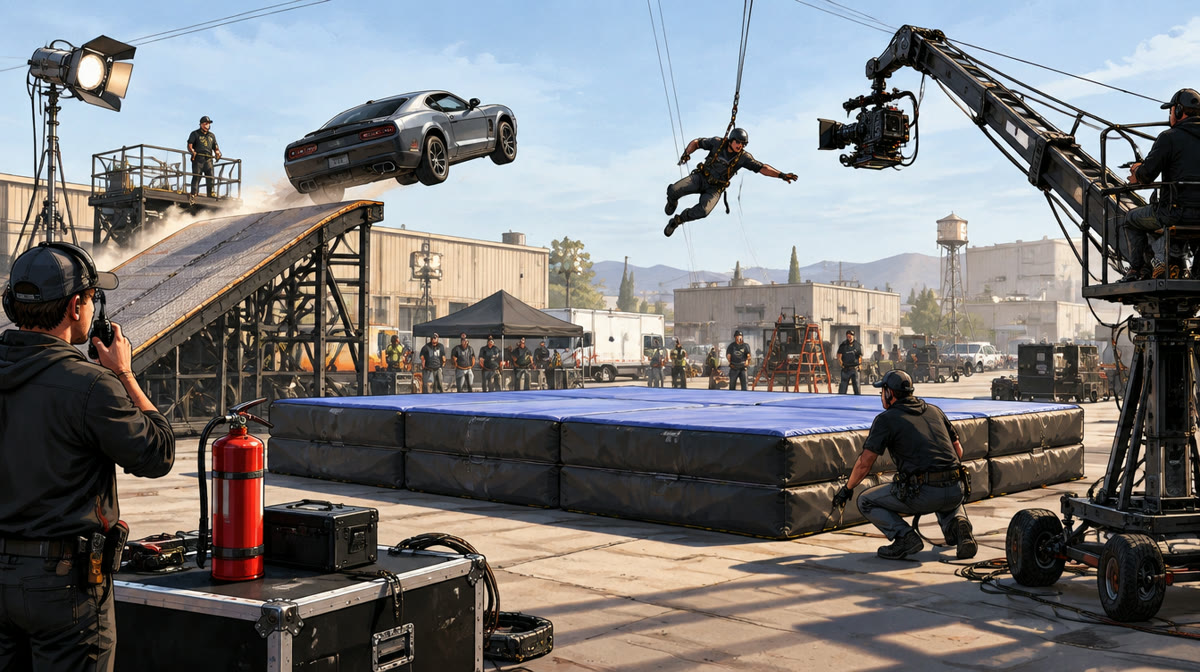
Before digital effects became widespread, action sequences depended almost entirely on trained stunt performers, camera trickery and carefully engineered practical effects. Even in the modern era of visual effects, filmmakers frequently prefer practical stunts for realism, and the history of stunt work includes both remarkable ingenuity and genuine danger.
Buster Keaton's real risks
Silent film star Buster Keaton famously performed his own dangerous stunts, including the scene in Steamboat Bill, Jr. from 1928 where a building facade falls around him, with a small open window positioned precisely to let his body pass through. The stunt required exact positioning, since a miscalculation of even a few inches could have caused serious injury.
Car chases and genuine crashes
Many classic car chase sequences, including those in Bullitt from 1968 and The French Connection from 1971, used real driving stunts performed at genuine speed rather than relying on effects. Steve McQueen, an experienced racer, performed some of his own driving in Bullitt, though professional stunt drivers handled the most dangerous segments.
A practical stunt convinces an audience partly because their body recognizes real weight and momentum, something early digital effects struggled to replicate.
- Stunt coordinators plan sequences with extensive rehearsal and safety rigging before filming.
- Fire stunts require specialized fire-retardant gel and clothing to protect performers.
- High falls often use air bags or cardboard boxes positioned precisely beneath the performer.
- Stunt doubles are matched carefully to an actor's build and movement style.
Practical explosions and effects
Many action films, including several entries in the Mad Max franchise, favour real vehicle stunts and practical explosions over purely digital recreation, arguing that physical effects interact with light, dust and debris in ways audiences perceive as more convincing. Mad Max: Fury Road, released in 2015, was noted for its heavy reliance on practical stunt work despite modern effects technology being available.
Tragic accidents shaped safety regulations
Stunt work carries real risk, and industry safety standards have tightened significantly following serious accidents on film sets over the decades. Organizations representing stunt performers have pushed for improved safety protocols, insurance standards and recognition, including advocacy for a dedicated Academy Award category for stunt coordination, which as of the mid-2020s still does not exist.
- Stunt performers typically undergo specialized training in disciplines like martial arts, gymnastics and precision driving.
- Modern productions often combine practical stunts with digital effects to remove visible safety equipment.
- Second unit directors frequently oversee complex action sequences separately from the main director.
- Wire work allows performers to appear to fly, fall safely or perform enhanced physical feats.
Why practical stunts still matter
Even as digital effects have become extraordinarily advanced, many directors and audiences continue to value the authenticity that comes from real physical performance. Stunt work remains one of filmmaking's most physically demanding professions, requiring intense training and split-second precision under significant risk.
Understanding the effort behind a single action sequence adds appreciation for a craft that, despite technological change, still relies heavily on human skill, careful planning and calculated risk.
Shop this topic on Amazon
As an Amazon Associate we earn from qualifying purchases.
Test yourself on this topic
Movies · 12 questions
2000s Movie Blockbusters Quiz: 12 Big-Screen Questions
Trilogies, superhero reboots and the decade's record breakers. Twelve questions from the 2000s box office.
Famous Quotes · 12 questions
Famous Movie Quotes Quiz: Can You Name the Film?
Twelve lines that escaped their movies and became everyday speech. Match each quote to the film it came from.
Comments
Share your score, argue with a question or add a fact we missed. Comments are checked before they appear, and links are removed automatically.
- No comments yet. Be the first.