
Ancient Egypt Facts Beyond Pyramids and Pharaohs
Global Knowledge · 9 min read · 9/30/2026
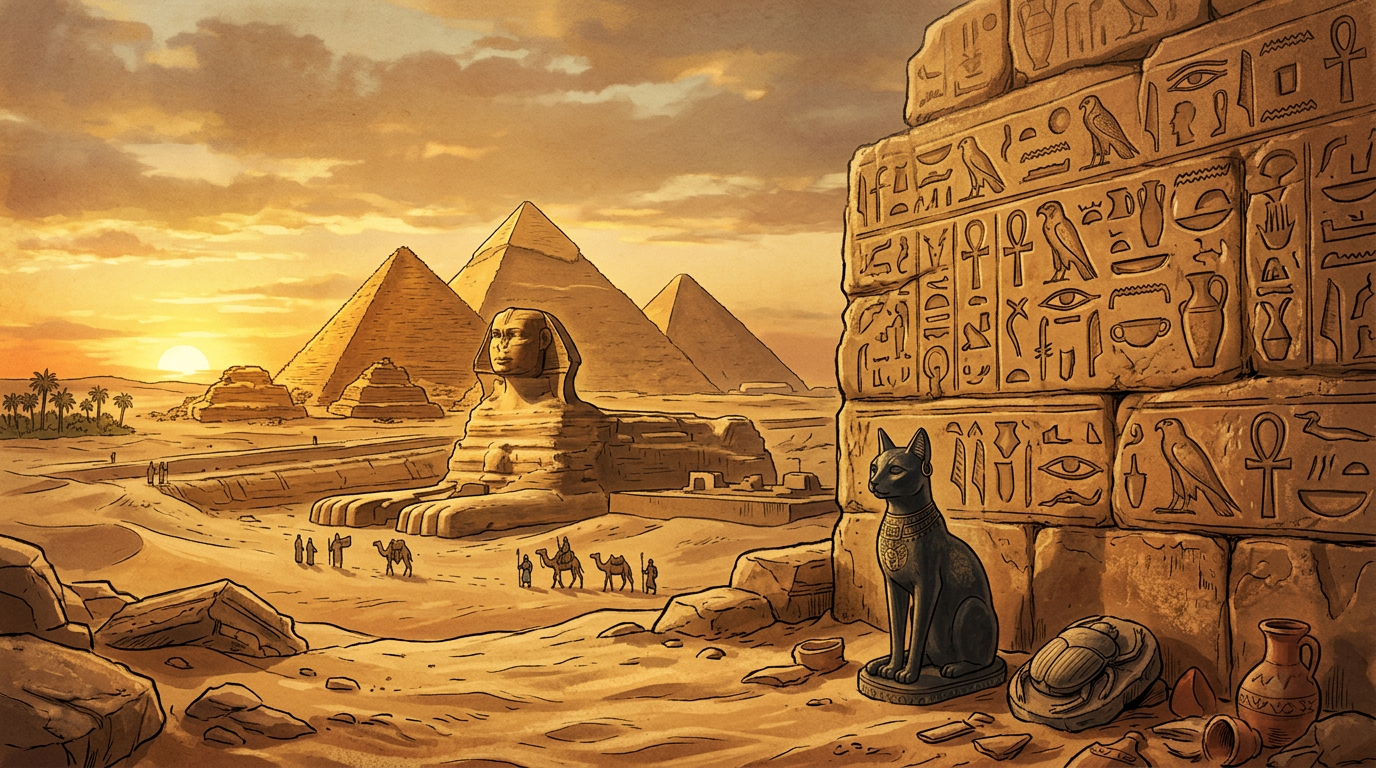
Ancient Egyptian civilization lasted for more than three millennia, so speaking of it as a single moment hides enormous change. The Great Pyramid was already ancient when Cleopatra VII ruled. Across that span, life along the Nile supported dense agriculture, specialized labour, long-distance trade and one of history's most durable writing traditions.
Pyramid builders were organized workers
Archaeology near Giza has uncovered workers' settlements, bakeries, animal bones and tombs. The evidence points to rotating labour forces supported by skilled permanent crews, not the vast enslaved workforce shown in many films. Farmers could perform state labour when the Nile flood limited field work, while specialists cut, transported and set stone.
- The Great Pyramid remained the tallest known human-made structure for roughly 3,800 years.
- Workers received food rations including bread, beer and meat.
- Crew names painted inside the monument reveal organized teams.
- The pyramid's core used local limestone while finer casing stone came from Tura.
Doctors wrote case notes
The Edwin Smith Papyrus preserves practical descriptions of injuries, examinations and treatments. Its cases proceed from head downward and distinguish conditions a physician could treat from those with an uncertain outlook. Egyptian medicine also mixed observation with religious practice, reminding us that ancient knowledge rarely fits modern professional categories.
The surviving medical texts matter not because every remedy worked, but because they show careful observation becoming a repeatable method.
Writing had several forms
Monumental hieroglyphs were only one script. Scribes used hieratic, a quicker cursive system, for religious and administrative documents, and later used demotic for everyday business and legal writing. Literacy was specialized, making trained scribes essential to taxation, storage, construction and diplomacy.
Makeup was practical and symbolic
Men and women wore eye cosmetics made from mineral pigments. Kohl reduced glare, carried social and religious meaning and may have inhibited some microbes, though ancient mixtures varied and should not be treated as modern medicine. Cosmetics also communicated status through materials and workmanship.
The Nile was a calendar
The annual Nile cycle structured farming and taxation. Egyptians divided the year into seasons linked to inundation, planting and harvest. State officials measured fields and yields, while canals and basins distributed water. Reliable agriculture made urban life and monument building possible.
- Papyrus served as a writing surface and as material for boats, mats and rope.
- Cats were associated with protection, but claims that every accidental killing meant execution are difficult to support.
- Egypt traded for cedar, incense, metals and luxury goods far beyond the Nile Valley.
- Mummification changed over time and was never limited to pharaohs.
Ancient Egypt's greatest achievement may be continuity rather than any single object. Its institutions repeatedly adapted to political collapse, foreign rule and environmental pressure while preserving a recognizable cultural identity for thousands of years.
Shop this topic on Amazon
As an Amazon Associate we earn from qualifying purchases.
Test yourself on this topic
Comments
Share your score, argue with a question or add a fact we missed. Comments are checked before they appear, and links are removed automatically.
- No comments yet. Be the first.