
Weird Facts About the Human Brain You Never Knew
Nature · 8 min read · 9/15/2026
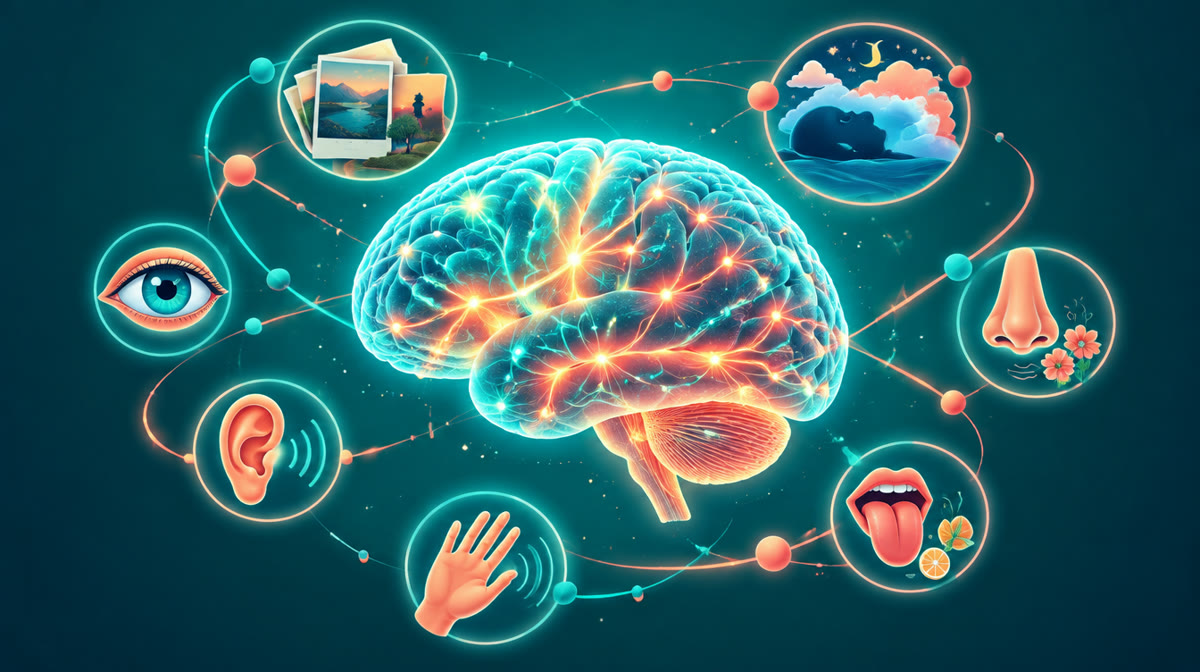
The brain is often described as a computer, but that comparison understates how strange it actually is. It rewrites its own connections, edits memories every time they are recalled, and constantly predicts sensory information rather than simply reacting to it. Neuroscience continues to reveal behaviours that challenge intuitive ideas about thinking and memory.
Memory is reconstructed, not replayed
Each time a memory is recalled, the brain can subtly alter it before storing it again, a process researchers call reconsolidation. This helps explain why eyewitness testimony can be unreliable even when a witness is confident and sincere. Memory functions more like an editable document than a fixed recording.
- The brain has no pain receptors of its own, which is why brain surgery can be performed while patients remain awake.
- The brain consumes roughly twenty percent of the body's energy despite its modest size.
- Neuroplasticity allows the brain to reorganize connections well into adulthood.
- Sleep plays an active role in consolidating memories rather than simply resting the mind.
Perception often runs ahead of reality
The brain constantly generates predictions about incoming sensory information based on past experience, then adjusts those predictions against actual input. This predictive processing helps explain optical illusions, since the brain sometimes favours its expectation over the literal signal reaching the eyes.
What feels like a direct window onto the world is often the brain's best guess, checked against incoming evidence.
Two hemispheres, one experience
The brain's two hemispheres specialise in different tasks, though the popular idea that people are strictly left-brained or right-brained oversimplifies a more integrated reality. Studies of patients who underwent hemisphere-separating surgery for severe epilepsy have offered unique insight into how the halves communicate through the corpus callosum.
Emotion and reasoning are intertwined
Contrary to older models portraying emotion as an obstacle to clear thinking, research on patients with damage to areas linked to emotional processing shows that impaired emotion can also impair decision-making. Sound judgment appears to depend on the ability to weigh emotional signals alongside logical analysis.
- The hippocampus plays a central role in forming new long-term memories.
- Damage to Broca's area typically affects speech production more than comprehension.
- Mirror neurons are thought to help humans understand others' actions and intentions.
- Chronic stress can measurably shrink certain brain regions involved in memory.
A lifetime of change
Although childhood is a period of especially rapid brain development, structural change continues throughout adulthood in response to learning, injury and environment. This ongoing plasticity underlies rehabilitation after stroke and supports the value of continued mental and physical activity later in life.
The brain's greatest trick may be making its constant editing and prediction feel effortless and seamless. Understanding these mechanisms does not make the experience of thought feel any less real, but it does explain why memory, perception and emotion behave far less predictably than most people assume.
Shop this topic on Amazon
As an Amazon Associate we earn from qualifying purchases.
Test yourself on this topic
Fun Math Tests · 12 questions
Fun Math Test: 12 Quick Puzzles, No Calculator
Mental arithmetic, number patterns and classic puzzles, each with the shortcut explained afterwards.

Horoscope · 12 questions
Zodiac Trivia Quiz: How Well Do You Know the Signs?
Twelve questions on the twelve signs: symbols, elements, dates and the astronomy behind the tradition.
Comments
Share your score, argue with a question or add a fact we missed. Comments are checked before they appear, and links are removed automatically.
- No comments yet. Be the first.