
Did You Know? The Odd Origins of Everyday Foods
Pop Culture · 7 min read · 2/9/2026
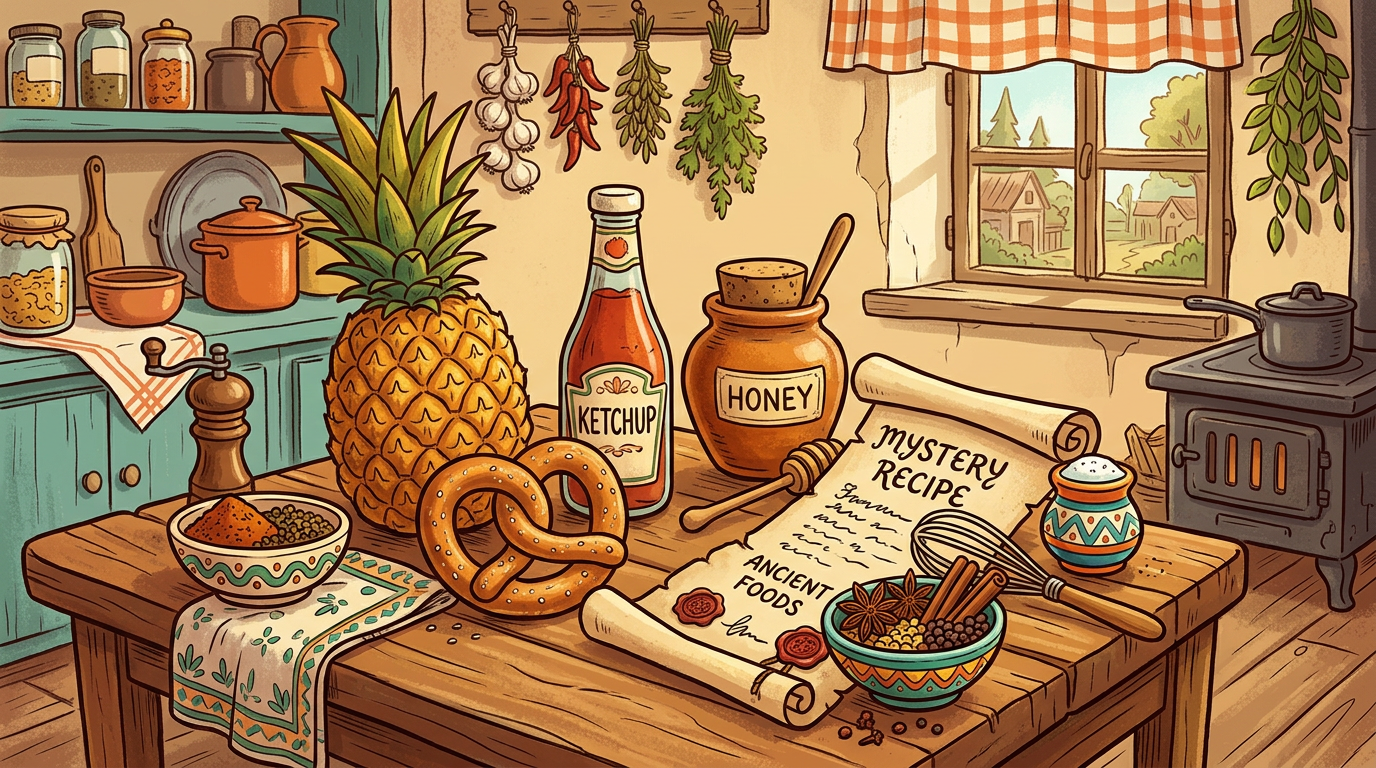
Nothing on a supermarket shelf arrived by a straight path. Foods we treat as ordinary were once luxuries, medicines, accidents or status symbols. Food history is one of the best trivia categories precisely because the twists are so well documented.
Ketchup was sold as medicine
In the 1830s an American physician promoted tomato-based preparations as a remedy for digestive complaints, and tomato pills were marketed with sweeping health claims. The claims did not survive scrutiny, but tomato ketchup as a condiment did, gradually shifting from a thin sauce to the thick, sweet, vinegar-forward product recognised today.
The word itself likely descends from a fermented fish sauce from Southeast Asia. Early European ketchups were made from mushrooms, walnuts and oysters. Tomato only became the default much later.
Pineapples were rented
When pineapples first reached Europe they were extraordinarily expensive to import and nearly impossible to grow locally without heated glasshouses. A single fruit could cost the equivalent of several months of a labourer's wages. Wealthy hosts displayed them as centrepieces, and there is good historical evidence that fruit was rented for an evening's display before being sold on to someone who would actually eat it.
- Carrots were commonly purple, white or yellow before orange varieties were widely cultivated.
- Pretzels are traditionally linked to European monastic baking, with the knot said to represent arms folded in prayer.
- Tomatoes were treated with suspicion in parts of Europe for decades because of their botanical relatives.
- Chocolate was consumed as a bitter drink for centuries before sweetened solid bars existed.
Accidents that became staples
Several familiar products exist because something went wrong. Worcestershire sauce is said to have been abandoned as unpalatable and only rediscovered after long fermentation improved it. Crisps have a popular origin story involving a customer who kept complaining that fried potatoes were cut too thick. Not every anecdote survives scholarly checking, but the pattern is real: preservation experiments and kitchen mistakes shaped modern menus.
Tell me what you eat, and I will tell you what you are.
Why this makes great trivia
Food questions work in quizzes because everyone has a personal stake. You have eaten the evidence. That makes the surprise land harder when a familiar item turns out to have a strange past, and it makes the fact much easier to remember afterwards.
Try our pop culture quizzes for more questions in this vein, where everyday objects hide unexpected histories.
Test yourself on this topic
Comments
Share your score, argue with a question or add a fact we missed. Comments are checked before they appear, and links are removed automatically.
- No comments yet. Be the first.