
Chocolate History Facts From Cacao to Candy Bar
Pop Culture · 8 min read · 9/15/2026
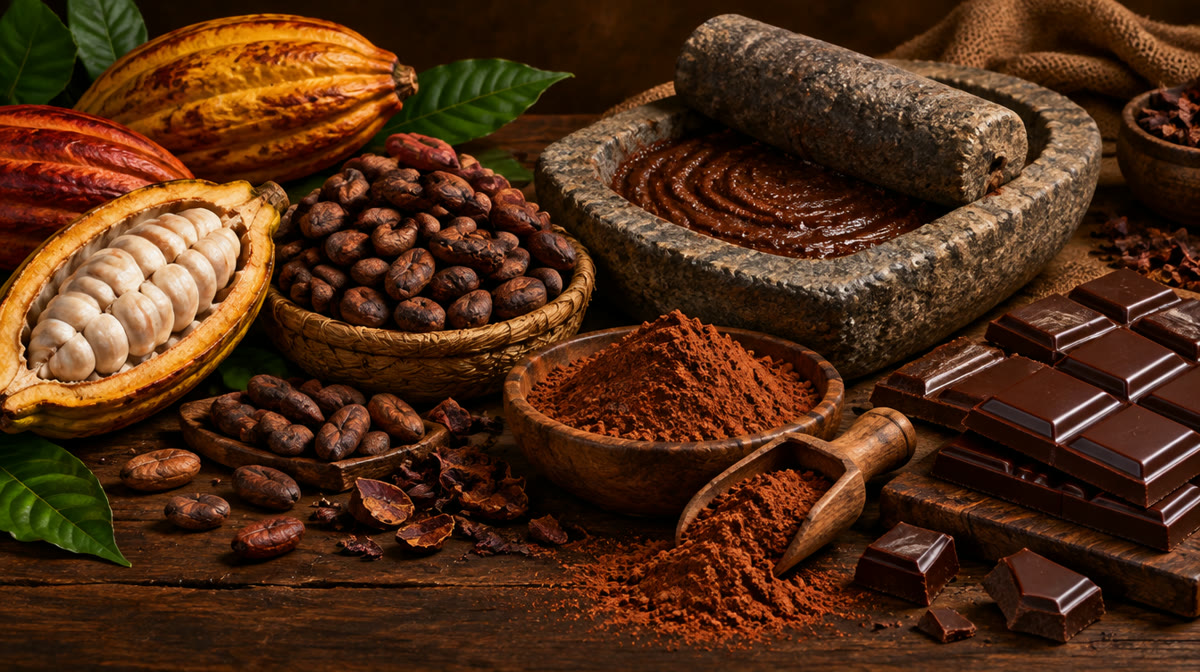
Chocolate's journey from a bitter Mesoamerican ceremonial drink to a mass-produced sweet treat spans thousands of years and multiple continents. The sweet chocolate bar familiar today is a relatively recent invention compared to the much older tradition of preparing cacao.
Cacao began as a bitter, spiced drink
The Olmec, Maya and later Aztec civilizations in Mesoamerica prepared cacao as a bitter, frothy drink, often mixed with chilli, spices or cornmeal, rather than the sweetened solid form familiar today. Archaeological evidence of cacao residue in ceramic vessels dates back several thousand years, showing its long ceremonial and social importance.
Cacao beans functioned as currency
In parts of Mesoamerica, cacao beans were valuable enough to be used as a form of currency, with historical records describing prices for goods and services denominated in specific quantities of beans. This dual role as both food and money underscores how highly cacao was valued long before Europeans encountered it.
For centuries, chocolate was consumed as a bitter beverage reserved largely for rulers and elite ceremonial occasions, not as an everyday sweet.
- Spanish colonizers brought cacao to Europe in the 16th century, where sugar was gradually added to suit European tastes.
- The word chocolate is widely believed to derive from Nahuatl language roots.
- Cacao was used in Aztec religious rituals and was associated with the god Quetzalcoatl in some traditions.
- Early European chocolate remained a luxury drink for the wealthy for well over a century.
The solid chocolate bar is a 19th-century invention
Dutch chemist Coenraad van Houten developed a process in 1828 to extract cocoa butter and create a more easily mixed cocoa powder, a key innovation that eventually enabled solid chocolate production. British company J.S. Fry & Sons is generally credited with creating the first mass-produced solid chocolate bar in 1847 using this refined cocoa process.
Milk chocolate followed soon after
Swiss chocolatier Daniel Peter successfully combined chocolate with milk powder in 1875, developing what became modern milk chocolate, reportedly with assistance from Henri Nestlé, whose company had already developed condensed milk products. This innovation made chocolate significantly smoother and more broadly appealing than earlier bitter formulations.
- Milton Hershey founded the Hershey Chocolate Company in 1894, later helping popularize affordable milk chocolate in the United States.
- Cocoa production today is concentrated heavily in West African countries including Ivory Coast and Ghana.
- White chocolate technically contains no cocoa solids, only cocoa butter, sugar and milk.
- Chocolate's melting point is close to human body temperature, contributing to its smooth mouthfeel.
A treat with a complicated modern legacy
Modern chocolate production has faced serious ethical scrutiny regarding labour practices, including child labour concerns in parts of the West African cocoa supply chain, prompting certification programs and corporate commitments aimed at improving transparency and conditions, though significant challenges reportedly remain.
Chocolate's transformation from sacred bitter drink to everyday sweet reflects centuries of trade, chemistry and changing taste, alongside ongoing questions about how its global supply chain can be made fairer for the farmers who grow it.
Shop this topic on Amazon
As an Amazon Associate we earn from qualifying purchases.
Test yourself on this topic
Personality Tests · 12 questions
Which Snack Are You? Snack Personality Quiz
Twelve playful questions matching snack personalities to traits, moods and social styles. Pure fun.

Global Knowledge · 12 questions
World Capitals Quiz: 12 Countries, 12 Capital Cities
The capitals people get wrong most often, spread across five continents. Twelve questions, no repeats.

Pop Culture · 12 questions
Fun Trivia Questions and Answers Quiz
Twelve fun trivia questions and answers across movies, music, food, animals and everyday oddities.
Comments
Share your score, argue with a question or add a fact we missed. Comments are checked before they appear, and links are removed automatically.
- No comments yet. Be the first.