Cartoon Voice Acting Facts Fans Rarely Know
Cartoons · 8 min read · 9/15/2026
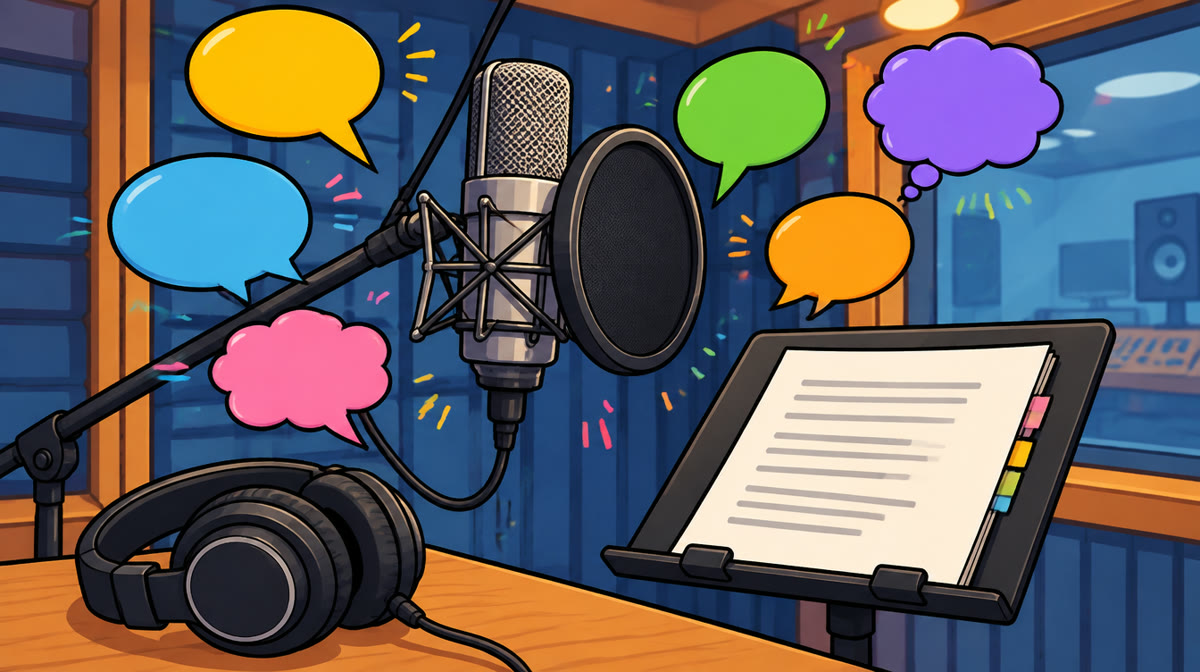
Voice acting for animation requires a different skill set than live-action performance, since actors must convey emotion, personality and timing entirely through vocal choices, often recording lines long before final animation exists. Many well-known cartoon facts about voice work remain surprising even to devoted fans.
One actor, many voices
Some of the most prolific voice actors in animation history have voiced dozens of characters within a single show or across an entire career. Mel Blanc, known as 'The Man of a Thousand Voices,' voiced numerous classic Looney Tunes characters including Bugs Bunny, Daffy Duck and Porky Pig, often shifting between distinct voices within the same recording session.
Improvisation shaped iconic lines
Animation's flexible production timeline sometimes allows performers to ad-lib dialogue that later becomes iconic. Robin Williams famously improvised extensively while voicing the Genie in Disney's Aladdin, released in 1992, generating far more material than the finished film could use, some of which animators built entire sequences around after the fact.
Because animation is drawn after recording, a great ad-libbed line can genuinely reshape a scene rather than simply being trimmed out.
- Nancy Cartwright has voiced Bart Simpson on The Simpsons since the show's debut in 1989.
- Tara Strong has voiced numerous characters across multiple long-running animated franchises.
- Some voice actors record their lines together in the same room to build natural chemistry.
- Table reads allow voice cast members to react to each other's timing before final recording.
Recording sessions happen out of sequence
Voice actors frequently record scenes out of chronological order and sometimes months apart, requiring them to remember a character's emotional arc without the benefit of a continuous narrative during recording. Directors often provide context and previous recordings to help maintain consistency across sessions.
Casting decisions can shape a character's design
In some productions, a voice actor's performance during auditions has influenced how animators finalize a character's personality, mannerisms or even physical design, since a strong vocal performance can suggest expressions and movement style before final artwork is locked in. This collaborative back-and-forth differs from typical live-action casting, where a role's physicality is usually already fixed.
- Some studios use scratch or temporary voice tracks during early animation before final casting is confirmed.
- Voice actors sometimes provide physical performance reference on camera to guide animators.
- Long-running shows can require the same voice actor to portray a character over several decades.
- Recasting a beloved character's voice actor can generate significant fan reaction.
A craft often underappreciated
Despite shaping some of the most memorable performances in entertainment, voice actors have historically received less mainstream recognition than on-screen performers, though awards recognizing voice work and growing fan conventions have increased visibility for the profession in recent decades.
Cartoon voice acting demands technical precision, emotional range and often physical stamina, since a single actor might record dozens of lines and character variations within one demanding studio session.
Shop this topic on Amazon
As an Amazon Associate we earn from qualifying purchases.
Test yourself on this topic
Cartoons · 12 questions
Cartoon Classics Quiz: Do You Remember Saturday Mornings?
A friendly twelve-question trip through decades of animated television, from talking dogs to catchphrases you still use.
Cartoons · 12 questions
90s Cartoons Quiz: Saturday Morning Trivia
The decade of cable cartoons, weird premises and unforgettable theme tunes. Twelve questions.
Comments
Share your score, argue with a question or add a fact we missed. Comments are checked before they appear, and links are removed automatically.
- No comments yet. Be the first.