

Wreck-It Ralph Easter Eggs: Real Video Game Cameos
Movies · 6 min read · 10/6/2026
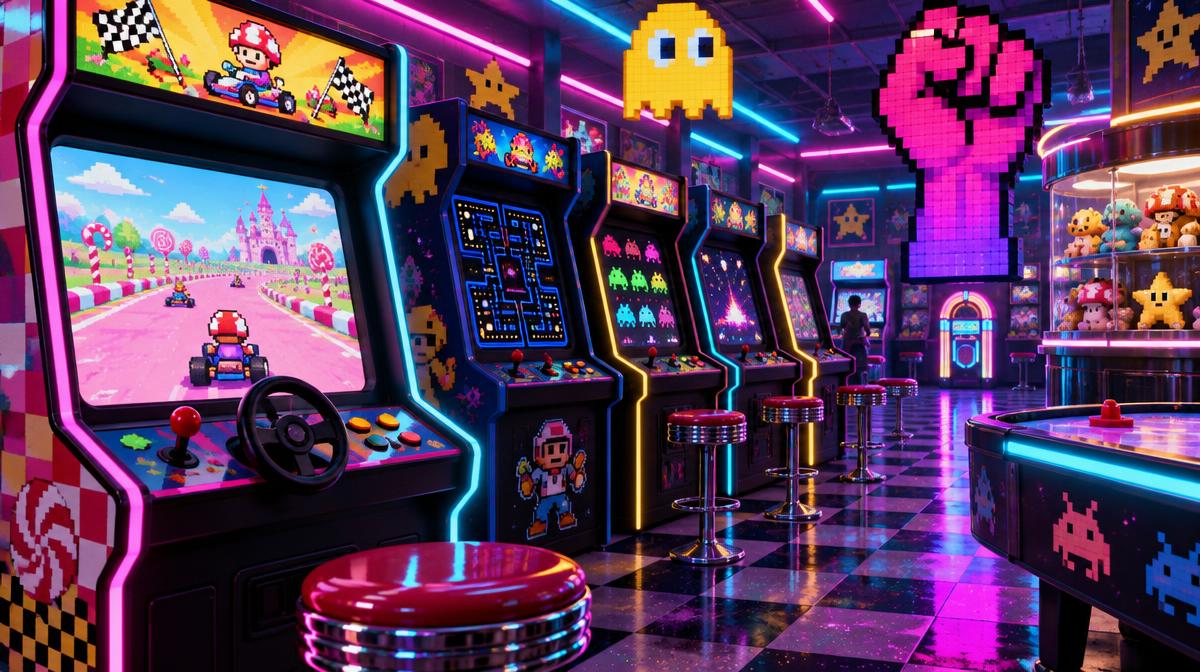
Wreck-It Ralph and its sequel, Ralph Breaks the Internet, serve as a massive love letter to gaming history, featuring dozens of authentic cameos from legendary franchises like Sonic the Hedgehog, Street Fighter, Pac-Man, and Super Mario Bros. Unlike many films that create generic parodies of games, Disney secured the rights to use actual characters, sound effects, and secret codes from companies like Nintendo, Sega, Capcom, Konami, and Namco. These cameos are meticulously placed to reflect the actual lore and mechanics of the original games, providing a rich layer of detail for veteran gamers.
The Bad-Anon Meeting: Villains Unite
One of the most iconic scenes in the original film takes place in the basement of the Pac-Man maze, where Ralph attends 'Bad-Anon,' a support group for video game villains. This scene is a treasure trove of real-world cameos. Seated around the circle is Bowser, the primary antagonist of Nintendo’s Super Mario franchise. Notably, Nintendo requested that Bowser drink his tea in a specific way to maintain his character integrity.
Next to Bowser sits Doctor Eggman (Dr. Robotnik) from the Sonic the Hedgehog series. Other recognizable villains in the circle include Neff, the rhinoceros-headed god from the Sega classic Altered Beast, and M. Bison and Zangief from Street Fighter II. While Zangief is technically a hero in the games, the film plays with his intimidating persona as a 'bad guy.' The circle also includes Clyde, the orange ghost from Pac-Man, who serves as the group leader, and Kano from Mortal Kombat, who performs his famous 'heart rip' fatality on a zombie seated next to him.
Street Fighter at Tapper’s
When the arcade closes, the characters head to Tapper’s, a bar based on the 1983 Midway game Root Beer Tapper. Here, the film leans heavily into the Street Fighter roster. Ryu and Ken are seen sharing a drink after a long day of fighting, discussing whether they should go for another round. In the background, Chun-Li and Cammy can be seen chatting near the bar.
One of the most humorous nods to Street Fighter mechanics occurs during the transition between games. As Ralph travels through the power cables, we see Blanka and Zangief in the background. Later, when the 'Out of Order' sign is placed on Ralph’s cabinet, we see Ryu walking through Game Central Station, mirroring his iconic stage background from the games. The film even includes the famous 'HUD' (Heads Up Display) elements during the brief snippets of gameplay shown at the start of the movie.
The Sega Speedster: Sonic the Hedgehog
Sonic the Hedgehog makes several significant appearances across both films. In the first movie, Sonic appears on a digital PSA billboard in Game Central Station, warning fellow characters about the dangers of dying outside their own games. His voice is provided by Roger Craig Smith, the official voice actor for Sonic at the time.
In Ralph Breaks the Internet, Sonic’s role expands slightly. During a scene where Ralph and Vanellope are exploring the internet, Sonic explains the concept of 'Google' and how the search bar works. The blue blur is also seen attending a book club meeting. Sega’s presence isn't limited to Sonic; Q*bert, the titular character from the 1982 Gottlieb game, plays a recurring emotional role as a 'homeless' character after his game is unplugged. The film even includes Q*bert’s signature synthesized speech bubbles filled with random symbols.
Pac-Man and the Namco Legacy
Namco’s Pac-Man is treated as a high-tier celebrity in the world of Litwak’s Arcade. Pac-Man himself appears as a guest at the Nicelanders' 30th-anniversary party, where he is seen stuffing his face with shrimp. The sound effects used when he moves or eats are taken directly from the original 1980 arcade ROM.
Beyond the yellow puck, the ghosts Blinky, Pinky, Inky, and Clyde appear multiple times. The game 'Pac-Man' is established as the place where villains go to vent, likely because the maze layout provides a private meeting space. Even the Dig Dug protagonist (Taizo Hori) and the Pooka enemies make brief appearances in the background of Game Central Station, showcasing the depth of Namco's involvement.
The Konami Code and Technical Easter Eggs
For hardcore gamers, the most satisfying Easter egg is King Candy’s use of the Konami Code. To access the internal programming of the Sugar Rush game, King Candy pulls out a gold NES controller and inputs: Up, Up, Down, Down, Left, Right, Left, Right, B, A, and Start. This is the legendary cheat code created by Kazuhisa Hashimoto, first appearing in Gradius and popularized by Contra.
Other technical nods include the graffiti in Game Central Station. If you look closely at the walls, you can see 'Aerith Lives' scrawled in the background, a reference to Final Fantasy VII and the urban legends surrounding the character Aerith Gainsborough. There is also a mention of 'Sheng Long,' a reference to a famous Street Fighter II localization error that led players to believe there was a secret boss character.
Disney Meets the Modern Web
In Ralph Breaks the Internet, the cameos shift from retro arcade icons to modern internet staples. While the Disney-owned properties (Star Wars, Marvel, Pixar) take center stage in the 'Oh My Disney' sequence, video games are still represented. A poster for Fortnite can be seen, and characters from the mobile sensation Angry Birds make a brief appearance. The sequel also features a high-stakes racing game called Slaughter Race, which, while fictional, heavily draws inspiration from Grand Theft Auto and Twisted Metal, featuring a gritty aesthetic that contrasts with the bright colors of the first film’s Sugar Rush.
Nintendo’s Subtle Presence
While Bowser is the most prominent Nintendo character, he isn't the only one. In Game Central Station, the 'Super Mushroom' from the Mario series appears as an item Ralph pulls out of a 'Lost and Found' bin. However, notably absent is Mario himself. Director Rich Moore stated in interviews that they wanted to include Mario, but couldn't find a scene that felt organic to his status as the 'ambassador' of gaming. Despite his physical absence, his presence is felt through the mention of his name and the inclusion of his arch-nemesis.
FAQ
- Is the Konami Code in Wreck-It Ralph accurate?
Yes, King Candy inputs the exact sequence (Up, Up, Down, Down, Left, Right, Left, Right, B, A) using a Nintendo Entertainment System controller to open the game's source code.
- Which Street Fighter characters appear?
Ryu, Ken, Chun-Li, Cammy, M. Bison, Zangief, and Blanka all make appearances. Sagat’s presence is also hinted at through background art.
- Why isn't Mario in the movie?
While Bowser appears, Mario was left out because the writers felt they couldn't give him a significant enough role that matched his legendary status. He is mentioned by name during the Nicelanders' party.
- Is Tapper a real game?
Yes, Tapper (or Root Beer Tapper) was an arcade game released by Bally Midway in 1983. The bartender in the film is the original protagonist of that game.
- What does Q*bert say in the movie?
Q*bert speaks in 'Q*bert-ese,' a series of synthesized electronic noises accompanied by a speech bubble containing symbols like @, #, and %. The film treats this as a real language that Felix eventually learns to translate.
Shop this topic on Amazon
As an Amazon Associate we earn from qualifying purchases.
Test yourself on this topic
Movies · 12 questions
Wreck-It Ralph Arcade Worlds Trivia Quiz
Jump between arcade cabinets and the internet with this trivia quiz on Wreck-It Ralph and its sequel.
Cartoons · 12 questions
Cartoon Classics Quiz: Do You Remember Saturday Mornings?
A friendly twelve-question trip through decades of animated television, from talking dogs to catchphrases you still use.
Movies · 12 questions
2000s Movie Blockbusters Quiz: 12 Big-Screen Questions
Trilogies, superhero reboots and the decade's record breakers. Twelve questions from the 2000s box office.
Comments
Share your score, argue with a question or add a fact we missed. Comments are checked before they appear, and links are removed automatically.
- No comments yet. Be the first.