

Why Doesn’t a Horse Die From a Poisonous Snake Bite?
Animals · 5 min read · 10/16/2026
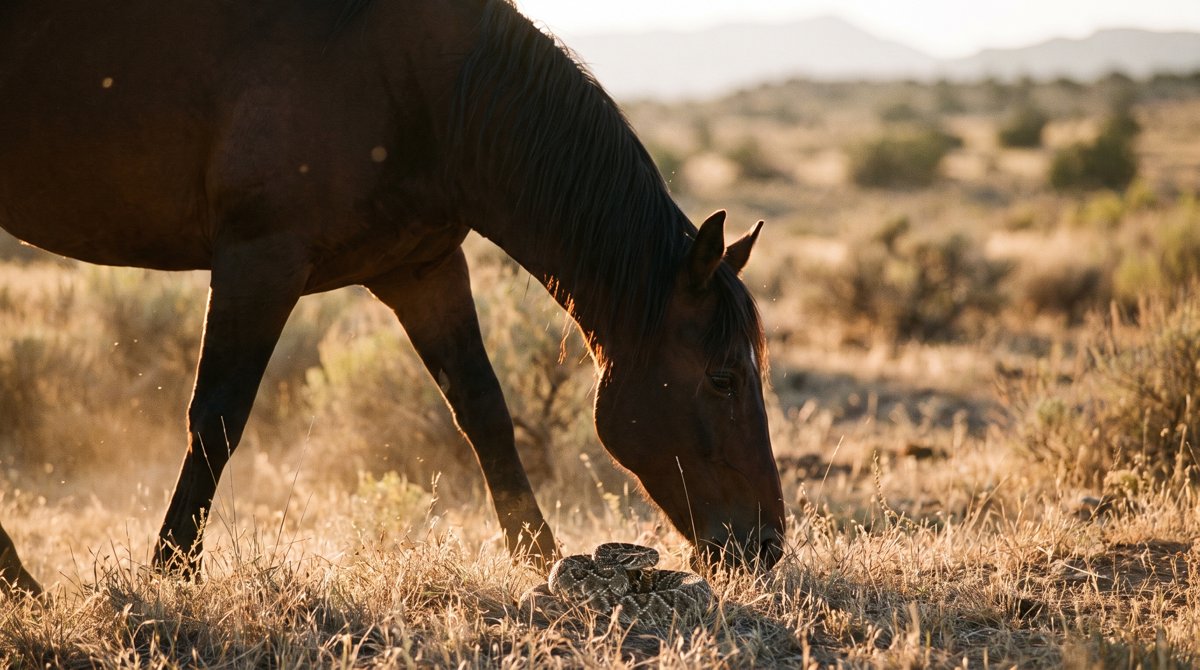
AI-generated cover illustration. Sources and study notes below.
Short answer: horses aren’t immune to snake venom. They usually survive because they are so large. A rattlesnake delivers roughly the same amount of venom whether it bites a 10 kg dog or a 500 kg horse, so in a horse the dose per kilogram of body weight is far smaller. Most bitten horses recover with veterinary care, but bites can still be serious or fatal, mainly when they cause swelling that blocks breathing.
Body size dilutes the venom
Venom toxicity depends heavily on dose relative to body weight. An adult horse often weighs 400–600 kg, many times more than a person or dog. The same bite that can overwhelm a small animal is spread through a much larger blood volume and tissue mass, so whole-body poisoning is less common.
| Animal | Typical weight | Relative venom dose |
|---|---|---|
| Small dog | 10 kg | Very high |
| Adult human | 70 kg | High |
| Horse | 500 kg | Low |
Where horses get bitten matters most
Curious horses sniff and graze near snakes, so most bites land on the muzzle, nose or face. Horses breathe only through their nose, not their mouth. Heavy swelling around the nostrils can therefore narrow the airway and suffocate a horse — this is the biggest immediate danger, rather than venom shutting down the body. Bites on the legs are less likely to threaten breathing but can cause severe tissue damage.
The hidden risks after a bite
- Airway swelling from face bites, which may need a vet to keep the nostrils open.
- Tissue death and infection at the bite site, including tetanus risk.
- Heart damage reported weeks later in some rattlesnake-bitten horses, so follow-up checks matter.
- Blood-clotting problems, depending on the snake species.
What owners should do
Call a vet immediately and keep the horse calm and still to slow venom spread. If the bite is on the face, vets may place short lengths of tubing in the nostrils to keep the airway open before swelling peaks. Don’t cut the wound, suck out venom or apply a tight tourniquet. Treatment can include antivenom, anti-inflammatories, antibiotics and a tetanus booster.
FAQ
Are horses immune to rattlesnake venom? No. They tolerate it better because of size, but they can still die.
Is there a rattlesnake vaccine for horses? A rattlesnake vaccine has been marketed for horses in the US, but evidence for it is limited; ask your vet.
Can a snake bite kill a foal? Yes. Foals and ponies are smaller, so the venom dose is relatively larger and more dangerous.
Quick quiz: Horses and snake bites
Question 1 of 10
Why do horses usually survive snake bites?
Sources & further reading
Sources checked for this article’s publication on October 16, 2026. Study figures retain their original publication dates.
Shop this topic on Amazon
As an Amazon Associate we earn from qualifying purchases.
Test yourself on this topic

Comments
Share your score, argue with a question or add a fact we missed. Comments are checked before they appear, and links are removed automatically.
- No comments yet. Be the first.