
When Was World War II? Timeline & 20-Question Quiz
Global Knowledge · 6 min read · 10/8/2026
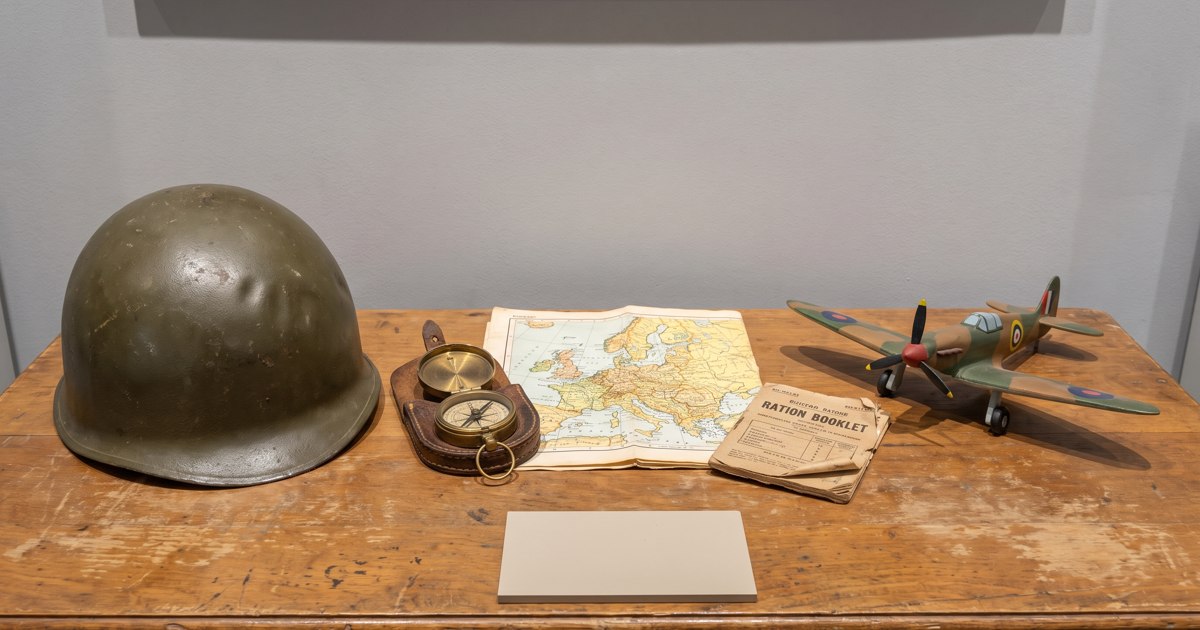
AI-generated cover illustration. Sources and study notes below.
World War II is usually dated from September 1, 1939, when Germany invaded Poland, to September 2, 1945, when Japan signed its formal surrender. Fighting in Asia has an earlier history, including the full-scale Sino-Japanese War beginning in July 1937. The dates 1939–1945 are a useful global shorthand, not a claim that every country entered the war on the same day or that all violence began and ended within those boundaries.
World War II timeline: the key dates in order
| Date | Event | Why it matters |
|---|---|---|
| July 7, 1937 | Marco Polo Bridge incident | A key starting point for the full-scale Sino-Japanese War |
| September 1, 1939 | Germany invades Poland | Conventional starting date for World War II in Europe |
| September 3, 1939 | Britain and France declare war on Germany | The invasion develops into a wider European war |
| September 17, 1939 | Soviet forces invade eastern Poland | Poland faces invasion from a second direction |
| April 9, 1940 | Germany invades Denmark and Norway | The war expands in northern Europe |
| May 10, 1940 | Germany attacks in western Europe | The offensive includes the Netherlands, Belgium and France |
| June 22, 1940 | France signs an armistice with Germany | Occupation and the Vichy regime follow |
| Summer–autumn 1940 | Battle of Britain | Britain resists a major German air campaign |
| June 22, 1941 | Operation Barbarossa begins | Germany invades the Soviet Union |
| December 7, 1941 | Japan attacks Pearl Harbor | The US declares war on Japan the following day |
| December 11, 1941 | Germany and Italy declare war on the US | The European and Pacific conflicts become further linked |
| June 4–7, 1942 | Battle of Midway | A major naval turning point in the Pacific |
| October–November 1942 | Second Battle of El Alamein | A major Allied victory in North Africa |
| February 2, 1943 | Remaining German forces surrender at Stalingrad | The battle ends in a major Soviet victory |
| September 1943 | Italy’s armistice is announced | Fighting and German occupation continue in much of Italy |
| June 6, 1944 | D-Day landings in Normandy | Allied forces establish a western European invasion foothold |
| May 8, 1945 | V-E Day | Victory in Europe is marked by the Western Allies |
| August 6 and 9, 1945 | Atomic bombings of Hiroshima and Nagasaki | The bombings kill large numbers of people and precede Japan’s surrender |
| August 1945 | Soviet Union enters the war against Japan | Soviet forces attack in Manchuria |
| August 15, 1945 (Japan) | Japan broadcasts acceptance of surrender terms | The announcement is marked on different civil dates around the world |
| September 2, 1945 | Japan signs formal surrender aboard USS Missouri | Common formal end date of World War II |
Why 1937 sometimes appears as a starting year
Japan had occupied Manchuria beginning in 1931, and fighting between China and Japan widened dramatically in 1937. Histories focused on Asia therefore often start earlier than September 1939. A question asking ‘when did World War II begin?’ needs context: September 1, 1939 is the conventional European starting date, while an account of the connected conflicts can trace earlier events. It is better to state the convention than mark every other framing as wrong.
Who fought: Allies, Axis and changing participation
The principal Axis powers were Germany, Italy and Japan. Major Allied powers included Britain, the Soviet Union, the United States and China, alongside many other countries, colonial forces and resistance movements. Membership and wartime relationships changed. The Soviet Union was invaded by Germany in June 1941, the US entered in December 1941, and Italy’s 1943 armistice did not end fighting on the peninsula. Describing one unchanging team list for all six years loses that history.
V-E Day, May 9 and why the European ending has two dates
V-E Day is May 8, 1945 in the Western Allied commemorative calendar. Germany’s surrender was recorded through ceremonies at Reims and Berlin, and the Berlin process occurred across the late-night boundary between May 8 in central Europe and May 9 in Moscow. Soviet and several successor-state commemorations use May 9. This distinction is not evidence that Japan also surrendered in May: the Pacific war continued.
V-J Day: announcement versus signed surrender
Japan’s surrender announcement is associated with August 15 in Japan and August 14 in some other time zones. The formal instrument of surrender was signed on September 2, 1945 aboard USS Missouri in Tokyo Bay. ‘V-J Day’ can refer to the announcement or formal surrender depending on the country and commemorative usage. If an exam or quiz asks for the formal ending date, September 2 is the precise answer.
The Holocaust belongs in the history, not as a game score
Nazi Germany and its collaborators murdered six million Jewish people in the Holocaust and persecuted and killed millions of other victims. Understanding the war requires learning about occupation, persecution, forced labour and mass murder as well as military operations. The timeline is a starting guide, not a substitute for survivor testimony and museum scholarship. The questions below test chronological knowledge; they do not turn human suffering into entertainment or rank its importance by a score.
How long did the war last?
Using the conventional dates September 1, 1939 to September 2, 1945, the span is six years and one day. That does not mean a soldier, civilian or country experienced exactly that duration of combat. Liberation, surrender, demobilisation, displacement and reconstruction unfolded at different times. For a classroom or pub quiz, specify ‘conventional dates’ and distinguish the European ending from the formal Japanese surrender.
World War II timeline: 20 questions
Question 1 of 20
What year is the conventional European starting year of World War II?
Sources & further reading
Editorial review: October 8, 2026. Calendar tools calculate dates automatically; study figures retain their original publication dates.
Shop this topic on Amazon
As an Amazon Associate we earn from qualifying purchases.
Comments
Share your score, argue with a question or add a fact we missed. Comments are checked before they appear, and links are removed automatically.
- No comments yet. Be the first.